
Conflict resolution counsellingDisagree without losing each other.
Conflict is part of every close relationship and every workplace. Disagreement is not the problem; it can even be healthy, a sign that people care enough to say what they think.
Online in English, with a therapist from our team, wherever you live · Sessions in Greek are with Matina Ladikou.
Each session lasts 45 minutes and costs 70 €. All fees
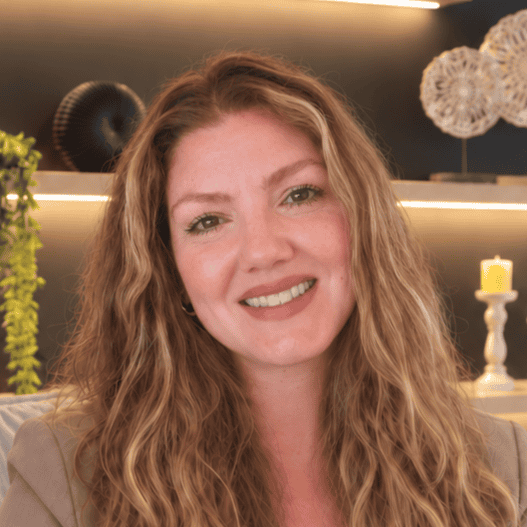 At Art of Mind, a centre founded by psychotherapist Matina Ladikou
At a glance
- Format
- Online by video on Google Meet, 45-minute sessions.
- Who you work with
- A therapist from our team, in English. In Greek, Matina Ladikou.
- Getting started
- Send an enquiry; we reply within 24 hours.
There is help
You don’t have to face this on your own
The problem starts when the same argument keeps coming back, when conversations escalate within seconds, when you avoid certain people or topics altogether, or when unresolved tension starts to affect your sleep, health and work.
At Art of Mind, a psychotherapy centre founded in Patras, Greece, in 2019, conflict resolution counselling in English takes place online by video with a therapist from our centre. It is for anyone caught in a conflict that feels stuck: with a parent or sibling, an adult child, a colleague or manager, a friend or a partner.
How to recognise a "stuck" conflict
- The same argument returns again and again, about different surface topics.
- Conversations escalate quickly, or end in silence and distance.
- You rehearse arguments in your head long after they are over.
- You avoid the person or certain topics to keep the peace.
- You feel unheard, and probably so does the other person.
- Small comments trigger big reactions, because they touch old hurts.
- The conflict is affecting your sleep, mood or work.
Recognising it
Why conflicts get stuck
Most stuck conflicts are not about the issue on the table. They are about what the issue means: respect, fairness, being valued, feeling safe or in control. When those needs feel threatened, people tend to respond with predictable strategies, criticising, defending, withdrawing or giving in, and each person's strategy triggers the other's.
Research on couples has documented one such cycle in detail. In a study of distressed and non-distressed couples, a pattern in which one partner demands and the other withdraws was linked with greater relationship distress, and roles could reverse depending on who raised the topic1. Similar dynamics appear between parents and adult children, between siblings and between colleagues.
Our wellbeing is closely tied to these relationships. A meta-analysis of 126 studies found that better marital quality was associated with better physical health, including lower cardiovascular reactivity during conflict2. A longitudinal study of young adults found that depression and anxiety were associated with later lower relationship support and higher conflict3, which suggests that conflict and mental health can feed each other.
Conflict at work
Workplace conflict deserves particular attention because it is hard to escape: you may see the person every day. Research on workplace relationship conflict notes that stress triggered by interpersonal conflict at work can damage relationships, reduce productivity and job satisfaction, and contribute to psychological injury claims5. Counselling can help you understand your part, manage the stress, plan conversations with colleagues or managers, and decide whether to involve HR or a mediator.
Our approach
How counselling differs from couples therapy
Conflict resolution counselling is usually individual, focused on conflict wherever it occurs. If the main conflict is with your partner and you both want to work on the relationship as a whole, see our couples therapy page. If anger is the main difficulty, see our page on anger management therapy.
Our approach
How our therapists work, step by step
Our therapists work in an integrative, evidence-informed way. Conflict counselling usually moves through these stages:
Mapping the conflict.
Who is involved, what happens, what each person seems to want and fear.
Finding the cycle.
The sequence of moves that turns a disagreement into a fight or a freeze.
Understanding your reactions.
Emotional triggers, the needs behind them and patterns from earlier relationships that may be repeating.
Calming the body.
So you can think during difficult conversations rather than fight or flee.
Communication skills.
Describing a specific behaviour and its effect on you, expressing a need, listening to understand, and using techniques from cognitive behavioural therapy where helpful to step back from "they always..." thinking.
Planning real conversations.
What you want to say, when, and how to respond if it goes badly.
Boundaries.
Deciding what you will and will not accept, and how to hold that calmly.
Acceptance.
Recognising that some conflicts cannot be solved, only managed, and deciding how to live well with that.
Research on relationship programmes supports this kind of work: a systematic review and meta-analysis found that relationship programmes, and therapy programmes in particular, improved couple satisfaction and communication, although the studies varied considerably4. Couple therapy more broadly has shown large improvements in relationship satisfaction and communication compared with waiting lists6.
Supporting the other person
Conflict always involves at least two people, and it can help to remember that the other person is probably also feeling hurt, misunderstood or afraid. Small changes help: choosing the right moment, starting softly rather than with criticism, listening until the other person feels understood before giving your view, and taking a break when either of you is too upset to think. None of this means giving up your position; it means making it possible to be heard.
Online, by video
Online counselling for conflict
Online sessions make it easier to fit counselling around work and family, and they allow occasional joint sessions with someone who lives elsewhere. Video psychotherapy has shown outcomes broadly comparable to in-person therapy7.
Is it time?
When to seek help
Consider counselling if a conflict has lasted for months, keeps escalating, is affecting your health or work, or is damaging relationships you care about. Seek help sooner if conflict is leading you to drink more, withdraw from others or feel persistently low.
If there is aggression, intimidation or violence, your safety comes first; in an emergency call 112.
Online, by video
How online counselling with us works
Send an enquiry.
Through our contact form with a short description, your time zone and preferred times.
We reply within 24 hours.
And arrange your first session with a therapist from our centre.
You meet by video.
On Google Meet, for 45 minutes, Monday to Friday between 09:00 and 21:00 Athens time.
The first session.
Maps the conflict and ends with an initial plan.
Sessions in English cost 70 € per 45-minute session. See our pricing page.
If you need urgent help
In an emergency call 112. In Greece you can also call 1018 (suicide prevention) or 10306 (mental-health support). For helplines in your country, see findahelpline.com.
Our founder
Art of Mind, founded by Matina Ladikou
A centre where you can talk without fear of judgement, at your own pace.
Matina Ladikou, psychotherapist and founder of Art of Mind, set up the centre in Patras, Greece, in 2019. Sessions in English are with a therapist from our team; sessions in Greek are with Matina, and you can book Greek sessions directly.
We don’t promise a “guaranteed” or “instant” result; we offer a space of trust and work at your own pace.
Trained in Biothymic Psychotherapy and Clinical Hypnosis, in Mental Health Counselling and in NLP, with an MSc in Criminology from Panteion University.
About Matina and the centreNext step
Start with your side of the story
You do not need the other person's agreement to begin. A short message is enough.
Before you start
Frequently asked questions
Can I come on my own if the other person will not attend?
Yes. Most conflict counselling starts with one person. Changing your side of a pattern, how you raise issues, listen and respond, often changes the whole dynamic, even when the other person is not in the room.
How is this different from couples therapy?
Couples therapy works with both partners on their relationship as a whole. Conflict resolution counselling focuses on conflict itself, with anyone in your life: a parent, sibling, adult child, colleague, manager or friend. If the main issue is your relationship with a partner and both of you are willing, couples therapy may suit you better.
Is this the same as mediation?
No. A mediator is a neutral third party who helps two sides reach an agreement. In counselling, the therapist works with you, or occasionally with both people, on understanding the conflict, managing your emotions and communicating more effectively. It can be a good preparation for mediation or for a difficult conversation.
What if the conflict involves aggression or threats?
If you are being threatened or hurt, your safety comes first. In an emergency call 112. Counselling can help you think through options and protect yourself, but it is not a substitute for protection.
How much does a session cost?
Sessions in English are 70 € per 45-minute session. Full details are on our pricing page.