
Phobia therapy onlineStop building your life around a fear.
You know the fear is out of proportion. Most people fly safely every day, the spider is harmless, the injection takes a second. Yet when you face it, or even think about it, your heart races, your breath shortens and every part of you wants to escape.
Online in English, with a therapist from our team, wherever you live · Sessions in Greek are with Matina Ladikou.
Each session lasts 45 minutes and costs 70 €. All fees
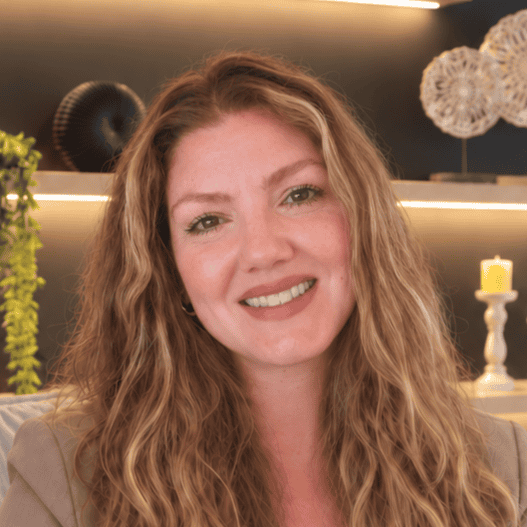 At Art of Mind, a centre founded by psychotherapist Matina Ladikou
At a glance
- Format
- Online by video on Google Meet, 45-minute sessions.
- Who you work with
- A therapist from our team, in English. In Greek, Matina Ladikou.
- Getting started
- Send an enquiry; we reply within 24 hours.
There is help
You don’t have to face this on your own
Over time, life starts to arrange itself around the fear: holidays you do not take, medical checks you postpone, lifts you avoid, a job offer you turn down because it involves travel.
Phobias are among the most treatable anxiety problems. At Art of Mind, a psychotherapy centre founded in Patras, Greece, in 2019, therapy for phobias in English takes place online by video with a therapist from our centre.
Recognising it
What is a phobia?
The NHS describes a phobia as an overwhelming and debilitating fear of an object, place, situation, feeling or animal, more pronounced than ordinary fear and often leading people to organise their lives around avoiding what they fear1. Common specific phobias include:
- Animals: dogs, spiders, snakes, insects, birds.
- The natural environment: heights, water, storms, the dark.
- Blood, injections and medical procedures, sometimes with fainting.
- Situations: flying, lifts, tunnels, bridges, driving, enclosed spaces.
- Others: vomiting, choking, loud noises.
Social anxiety, the fear of being judged by others, and agoraphobia, fear of situations where escape might be difficult, are more complex phobias that usually need broader work. See our social anxiety therapy page.
Phobias are very common. According to US national survey data, an estimated 9.1% of adults experienced a specific phobia in the past year and 12.5% at some point in their lives2. Cross-national data from the World Mental Health Surveys confirm that specific phobia is common worldwide, typically begins early in life, and that only a minority of people with it receive any treatment5.
How phobias show up
In the body
Racing heart, sweating, trembling, breathlessness, nausea, dizziness, or, in blood and needle phobia, a drop in blood pressure and fainting.
In the mind
Intense fear, expecting disaster, feeling unable to cope, fear of losing control or panicking.
In behaviour
Avoiding the trigger, escaping as soon as possible, relying on safety strategies such as only flying with medication or only driving on known routes.
Recognising it
How phobias develop and why they persist
Phobias can follow a frightening experience, but they can also be learned by watching others or by hearing repeatedly that something is dangerous. Research on childhood fears shows that threatening verbal information alone can increase fear of something6. Many people cannot remember how their phobia started, and that is fine; treatment does not depend on finding the origin.
What keeps a phobia going is avoidance. Every time you avoid or escape, anxiety drops and your brain records this as proof that the situation was dangerous. Because you never stay long enough to discover that the feared outcome does not happen, or that you can cope even if you feel very anxious, the fear stays intact.
Our approach
How therapy helps with phobias
Exposure-based therapy, meaning a planned and gradual approach to the feared situation, is the preferred treatment for specific phobia. A 2022 meta-analysis of exposure studies including 1,758 participants found large effects for both single-session and multi-session exposure, with no significant difference between them at post-treatment or follow-up3. Contemporary research focuses on inhibitory learning: designing exposure so that your expectations are tested and updated, rather than simply waiting for anxiety to fade4. Virtual reality exposure has also been studied as an alternative to real-life exposure for some phobias7.
Our therapists work in an integrative, evidence-informed way. For phobias, sessions usually include:
- Understanding your fear: what exactly you expect to happen, and what you do to stay safe.
- Building a ladder of steps from least to most frightening, agreed together.
- Gradual exposure, starting with imagination, pictures or videos during online sessions and moving to real-life practice between sessions.
- Testing predictions, using techniques from cognitive behavioural therapy where helpful: what did you expect, and what actually happened?
- Dropping safety behaviours step by step, so that confidence belongs to you rather than to the crutch.
- Specific skills where needed, for example applied tension for people who faint at the sight of blood or needles.
You always decide the pace. Good exposure is challenging but never forced.
Online, by video
Online therapy for phobias
Much of phobia work translates well to video. Your therapist can guide imaginal exposure, use photos and video clips in the session, and help you plan and review real-life steps. For fears linked to particular places, such as driving or lifts, you can even join a session from a phone near the feared situation, if it is safe to do so. Video therapy has shown outcomes broadly comparable to in-person therapy for anxiety-related problems8.
Is it time?
When to seek help
Consider therapy if a fear:
- has lasted for months and feels out of proportion;
- leads you to avoid travel, medical care, work opportunities or social events;
- causes intense distress or panic;
- is affecting the people around you, for example family holidays.
If avoiding medical procedures, such as blood tests or vaccinations, is putting your health at risk, it is worth seeking help sooner. We are happy to work alongside your doctor where that helps.
Online, by video
How online therapy with us works
Send an enquiry.
Through our contact form with a short note on your fear, your time zone and preferred times.
We reply within 24 hours.
And arrange your first session with a therapist from our centre.
You meet by video.
On Google Meet, for 45 minutes, Monday to Friday between 09:00 and 21:00 Athens time.
The first session.
Clarifies your fear and its history and ends with an initial plan.
Sessions in English cost 70 € per 45-minute session. See our pricing page. For anxiety more broadly, see our anxiety therapy page.
If you need urgent help
In an emergency call 112. In Greece you can also call 1018 (suicide prevention) or 10306 (mental-health support). For helplines in your country, see findahelpline.com.
Our founder
Art of Mind, founded by Matina Ladikou
A centre where you can talk without fear of judgement, at your own pace.
Matina Ladikou, psychotherapist and founder of Art of Mind, set up the centre in Patras, Greece, in 2019. Sessions in English are with a therapist from our team; sessions in Greek are with Matina, and you can book Greek sessions directly.
We don’t promise a “guaranteed” or “instant” result; we offer a space of trust and work at your own pace.
Trained in Biothymic Psychotherapy and Clinical Hypnosis, in Mental Health Counselling and in NLP, with an MSc in Criminology from Panteion University.
About Matina and the centreNext step
Your life does not have to fit around a fear
A short message is enough to start.
Before you start
Frequently asked questions
Will I be forced to face my fear?
No. Exposure is always planned together and done step by step, starting with something you feel able to try. You stay in control of the pace. The aim is to build confidence, not to overwhelm you.
How long does phobia treatment take?
Specific phobias often respond to relatively short, focused treatment. Research shows that some phobias improve substantially even with a single extended session, while others need several sessions. Your therapist will suggest a realistic plan after the first meeting.
Can phobias really be treated online?
Yes, in many cases. Much of the work, such as understanding the fear, planning the steps and practising with images, videos or imagination, can be done by video, and real-life practice is then carried out between sessions. Research on video therapy has found outcomes broadly comparable to in-person therapy for anxiety problems.
My phobia of needles makes me avoid medical care. Can you help?
Yes. Fear of needles, blood and medical procedures is common and can respond well to therapy. If you faint at the sight of blood or needles, tell your therapist, as there are specific techniques for this type of reaction.
How much does a session cost?
Sessions in English are 70 € per 45-minute session. Full details are on our pricing page.