
Dysthymia therapyWhen low has become your normal.
Dysthymia does not usually look dramatic. You get up, go to work, look after the people who depend on you and may even seem fine to others. Yet underneath, the colour has drained out of life for a long time: you feel flat, tired and self-critical, pleasure is muted, and the future looks grey rather than black.
Online in English, with a therapist from our team, wherever you live · Sessions in Greek are with Matina Ladikou.
Each session lasts 45 minutes and costs 70 €. All fees
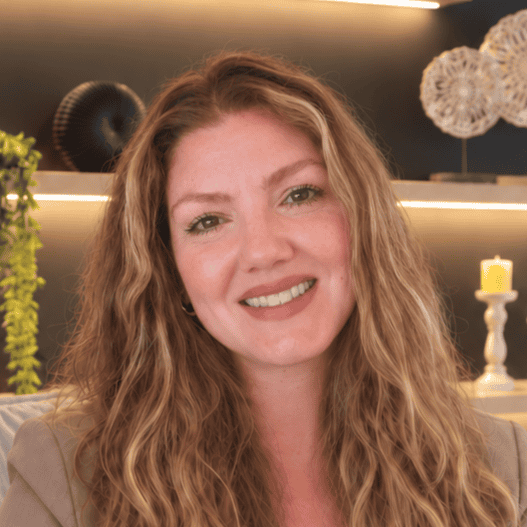 At Art of Mind, a centre founded by psychotherapist Matina Ladikou
At a glance
- Format
- Online by video on Google Meet, 45-minute sessions.
- Who you work with
- A therapist from our team, in English. In Greek, Matina Ladikou.
- Getting started
- Send an enquiry; we reply within 24 hours.
There is help
You don’t have to face this on your own
Because it has lasted so long, it can feel like who you are rather than something that is happening to you.
Dysthymia, now known as persistent depressive disorder, is a recognised and treatable form of depression. At Art of Mind, a psychotherapy centre founded in Patras, Greece, in 2019, therapy for persistent low mood in English takes place online by video with a therapist from our centre.
When low mood becomes the background of life
The US National Institute of Mental Health describes persistent depressive disorder, formerly dysthymic disorder, as chronic low-level depression that is not as severe as major depressive disorder but may last longer; a diagnosis requires a combination of depressive symptoms for two years or more1. Alongside low mood, people commonly describe changes in appetite or sleep, low energy, low self-esteem, poor concentration and feelings of hopelessness.
The US National Institute of Mental Health reports that an estimated 1.5% of US adults had persistent depressive disorder in the past year and 2.5% at some point in their lives, and that among those affected in the past year, almost half had serious impairment1. These are US figures, but they show that the condition is common and far from mild in its impact.
Recognising it
How dysthymia shows up
- Low or flat mood most days, for years.
- Low energy and tiredness, even without unusual effort.
- Low self-esteem and a harsh inner critic.
- Hopelessness: a sense that things will not really improve.
- Reduced pleasure: enjoying things less, rather than not at all.
- Difficulty concentrating and making decisions.
- Changes in sleep and appetite.
- Withdrawal: doing the minimum socially, feeling disconnected.
Because the symptoms are long-standing, many people do not seek help, or they seek help only when a more severe depressive episode develops on top, sometimes called double depression. If you are experiencing more intense depression, see our page on depression therapy.
Recognising it
Why dysthymia develops
As with other forms of depression, there is usually no single cause. Contributing factors can include family history, temperament, long-term stress, difficult early experiences, loss, loneliness and chronic health conditions. The WHO notes that people who have lived through abuse, severe losses or other stressful events are more likely to develop depression3. Over time, low mood shapes habits and beliefs, such as withdrawing, expecting disappointment and criticising yourself, which in turn keep the mood low.
Our approach
How therapy helps with dysthymia
A meta-analysis of 16 randomised trials of psychotherapy for chronic depression and dysthymia found that psychotherapy was effective compared with control conditions, though the effect was smaller than for shorter-lived depression2. It also found that combined psychotherapy and medication was more effective than either alone, and there were indications that at least 18 sessions are needed for psychotherapy to reach its best effect2. This is an honest message: dysthymia usually needs patient, steady work, and progress can be real even when it is gradual.
NICE guidance on depression in adults includes specific advice on managing chronic depression, as well as on preventing relapse4. Our therapists work in an integrative, evidence-informed way. For dysthymia, sessions often include:
- Understanding the long view: when the low mood started, what has kept it going and how it has shaped your life choices.
- Separating you from the depression: noticing which "personality traits" may actually be symptoms.
- Behavioural activation: gradually reintroducing activities that bring pleasure, mastery or connection, even before motivation returns.
- Techniques from cognitive behavioural therapy, where helpful, to examine long-held beliefs such as "nothing will change" or "I am not enough".
- Relationships: reducing isolation and addressing patterns in close relationships.
- Self-compassion: easing the self-criticism that often accompanies chronic low mood.
- Planning for the long term: recognising early signs of worsening and protecting the gains you make.
Supporting someone with persistent low mood
If someone close to you seems permanently low, avoid telling them to cheer up or that others have it worse. Spend time with them, invite them gently into activities, listen without rushing to fix, and encourage them to talk to a professional. Look after your own wellbeing too.
Online, by video
Online therapy for dysthymia
Low energy can make it hard to travel to appointments. Online sessions remove that barrier and support the regularity this work needs. A meta-analysis of randomised trials found that video-based psychotherapy for depression was roughly comparable to in-person therapy5.
Is it time?
When to seek help
Consider therapy if low mood has been present most days for months or years, if you feel you have "always been like this", or if it is affecting your work, relationships or health. Speak to a doctor as well, since some physical conditions and medicines can affect mood, and medication may be an option. We are happy to work alongside your doctor or psychiatrist.
Seek help urgently if you feel hopeless, have thoughts of not wanting to live or of harming yourself; see the information below.
Online, by video
How online therapy with us works
Send an enquiry.
Through our contact form with a short description, your time zone and preferred times.
We reply within 24 hours.
And arrange your first session with a therapist from our centre.
You meet by video.
On Google Meet, for 45 minutes, Monday to Friday between 09:00 and 21:00 Athens time.
The first session.
Covers your history and current difficulties and ends with an initial plan.
Sessions in English cost 70 € per 45-minute session. See our pricing page.
If you need urgent help
In an emergency call 112. In Greece you can also call 1018 (suicide prevention) or 10306 (mental-health support). For helplines in your country, see findahelpline.com.
Our founder
Art of Mind, founded by Matina Ladikou
A centre where you can talk without fear of judgement, at your own pace.
Matina Ladikou, psychotherapist and founder of Art of Mind, set up the centre in Patras, Greece, in 2019. Sessions in English are with a therapist from our team; sessions in Greek are with Matina, and you can book Greek sessions directly.
We don’t promise a “guaranteed” or “instant” result; we offer a space of trust and work at your own pace.
Trained in Biothymic Psychotherapy and Clinical Hypnosis, in Mental Health Counselling and in NLP, with an MSc in Criminology from Panteion University.
About Matina and the centreNext step
Life can have more colour
You do not have to keep carrying this alone. A short message is enough to start.
Before you start
Frequently asked questions
How is dysthymia different from ordinary depression?
Dysthymia, now usually called persistent depressive disorder, is a chronic, lower-level depression in which symptoms have been present for two years or more. Symptoms may be less intense than in a major depressive episode, but because they last so long they can quietly shape a person's whole life. Some people also experience episodes of more severe depression on top of it.
I have always been like this. Can therapy really help?
Many people with dysthymia believe low mood is simply their personality. Research shows that psychotherapy is effective for chronic depression and dysthymia, although it often needs more sessions than shorter-lived depression, and combining therapy with medication can work better than either alone for some people.
Do I need medication?
Some people with dysthymia benefit from medication, which is prescribed and monitored by a doctor or psychiatrist. Evidence suggests that combined treatment can be more effective than either therapy or medication alone. We are happy to work alongside your doctor.
How long does therapy for dysthymia take?
Usually longer than for a single episode of low mood. A meta-analysis found indications that at least 18 sessions may be needed for psychotherapy to reach its best effect in chronic depression. Your therapist will discuss a realistic plan with you.
How much does a session cost?
Sessions in English are 70 € per 45-minute session. Full details are on our pricing page.