
Online therapy for eating disordersA calmer relationship with food.
For many people, food stops being simply food long before anyone notices. It becomes a way of coping, of feeling in control, of numbing something painful, or of punishing yourself.
Online in English, with a therapist from our team, wherever you live · Sessions in Greek are with Matina Ladikou.
Each session lasts 45 minutes and costs 70 €. All fees
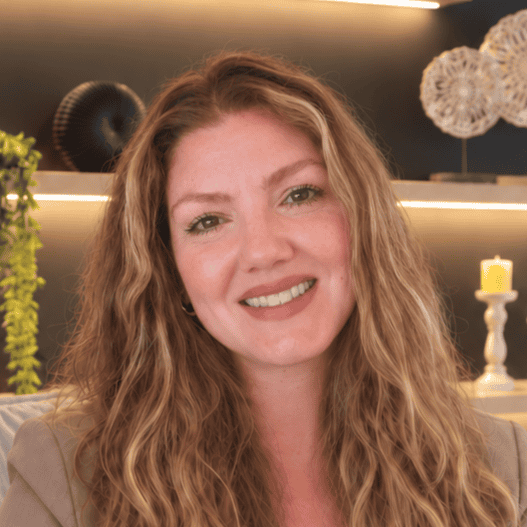 At Art of Mind, a centre founded by psychotherapist Matina Ladikou
At a glance
- Format
- Online by video on Google Meet, 45-minute sessions.
- Who you work with
- A therapist from our team, in English. In Greek, Matina Ladikou.
- Getting started
- Send an enquiry; we reply within 24 hours.
There is help
You don’t have to face this on your own
Meals turn into negotiations, the mirror into a judge, and secrecy into a habit that is exhausting to keep up.
At Art of Mind, a psychotherapy centre founded in Patras, Greece in 2019, we work with eating disorders, including binge eating, bulimia and anorexia, and with people whose relationship with food and their body has become a source of distress. Sessions in English are online, with a therapist from our centre, and we work alongside doctors to make sure your physical health is looked after too.
Recognising an eating disorder
Eating disorders take several forms, and they often overlap or shift over time.
Binge eating disorder
Regularly eating a large amount of food in a short time, often feeling unable to stop, eating when not hungry or in secret, and feeling guilty or ashamed afterwards (NHS).
Bulimia
Cycles of binge eating followed by attempts to compensate, such as vomiting, laxatives or excessive exercise, often hidden from others.
Anorexia
Keeping weight very low through restriction or other behaviours, with an intense fear of gaining weight. Physical signs can include feeling cold, dizzy or very tired, periods stopping, and sleep problems (NHS).
Other patterns
Many people do not fit neatly into one category but still struggle seriously with rigid rules, chaotic eating, or a preoccupation with weight and shape.
Lifetime prevalence figures from the US National Comorbidity Survey Replication are 0.6% for anorexia, 1.0% for bulimia and 2.8% for binge eating disorder among adults (NIMH). These are US figures and are given here as international context, not as rates for any particular country.
It is also common for eating disorders to sit alongside depression or anxiety (NHS), and they often begin as a way of managing difficult emotions. Understanding that function, without judgement, is an important part of recovery.
Recognising it
Why medical care matters
Eating disorders can affect the heart, bones, hormones, digestion and many other systems, sometimes without obvious warning signs. That is why therapy alone is not enough. The NHS advises seeing a GP as soon as possible if you think you may have an eating disorder, even if you are unsure, and encourages people worried about someone else to offer to go with them (NHS).
When you work with us, we ask that a doctor is involved in monitoring your physical health. We work alongside doctors, psychiatrists and dietitians where that helps, so that everyone supporting you is pulling in the same direction. If at any point your physical health needs more intensive care than online sessions can provide, we will tell you honestly and work with your medical team on the next steps.
What treatment involves
UK guidance from NICE recommends specialist psychological therapies for eating disorders, including individual eating-disorder-focused cognitive behavioural therapy (CBT-ED) for adults with anorexia among other options, and guided self-help or CBT-based approaches for binge eating (NICE NG69). The NHS lists guided self-help programmes and CBT, individually or in groups, as treatments for binge eating disorder (NHS).
Our therapists take an evidence-informed, integrative approach. We draw on CBT techniques where helpful, and we also give space to the emotions, relationships and life events that often lie underneath disordered eating. Depending on what you bring, therapy may include:
Regular eating and structure
Working towards a more predictable pattern of meals and snacks, which can reduce the cycles of restriction and bingeing.
Understanding triggers
Noticing the situations, emotions and thoughts that come before a binge, a purge or a restrictive day, and building other ways of responding.
Challenging rigid rules
Gently testing beliefs about food, weight and shape that keep the disorder going.
Emotional coping
Finding ways to tolerate and express difficult feelings without relying on food or restriction.
Body image and self-worth
Building an identity and a sense of value that rest on more than appearance.
Relapse prevention
Planning for difficult periods, so setbacks become something to learn from rather than proof of failure.
We do not promise a cure or a fixed timeline. Recovery is usually gradual and uneven, and results vary. We review progress with you regularly and adapt the plan together.
For the people around you
Teenagers and families
We work with teenagers aged 12 and over and with adults. For young people under 18, a parent or guardian should contact us first, and family involvement and close medical monitoring are particularly important. Research supports family involvement in treating adolescent anorexia (Austin et al., 2025), and we will discuss with you what level of care fits your situation.
Online, by video
How online therapy with us works
- Send an enquiry through our enquiry form, with your time zone and availability and whether the sessions are for you or for a young person in your care. Please do not include detailed health information in the form. We reply within 24 hours.
- First session online. You meet a therapist from our centre by video on Google Meet. We talk about your history, your current eating and health, what support you already have, and what you hope to change, and we agree an initial plan, including how your doctor will be involved.
- Regular sessions. Monday to Friday, 09:00 to 21:00 Athens time. Each session lasts 45 minutes and costs 70 €; see pricing.
Some people find it easier to talk about eating from their own home, without the effort of travelling to an appointment. Research suggests video-based therapy is broadly comparable to in-person therapy for many mental health conditions (Shaker et al., 2023), though the evidence specific to eating disorders is still developing. See our online therapy page for practical details.
Is it time?
When to seek help
Please consider reaching out if:
- thoughts about food, weight or shape take up much of your day;
- you are restricting, bingeing, vomiting, using laxatives or exercising to compensate;
- you feel out of control around food, or ashamed and secretive about eating;
- friends or family have expressed concern;
- your periods have stopped, or you feel dizzy, faint or constantly cold.
Seek urgent medical help for fainting, chest pain, a racing or irregular heartbeat, confusion, or if you are vomiting frequently. If you have thoughts of harming yourself, do not wait for a session.
If you need urgent help. In an emergency call 112. In Greece you can also call 1018 (suicide prevention) or 10306 (mental-health support). For helplines in your country, see findahelpline.com.
If you need urgent help
In an emergency call 112. In Greece you can also call 1018 (suicide prevention) or 10306 (mental-health support). For helplines in your country, see findahelpline.com.
Our founder
Art of Mind, founded by Matina Ladikou
A centre where you can talk without fear of judgement, at your own pace.
Matina Ladikou, psychotherapist and founder of Art of Mind, set up the centre in Patras, Greece, in 2019. Sessions in English are with a therapist from our team; sessions in Greek are with Matina, and you can book Greek sessions directly.
We don’t promise a “guaranteed” or “instant” result; we offer a space of trust and work at your own pace.
Trained in Biothymic Psychotherapy and Clinical Hypnosis, in Mental Health Counselling and in NLP, with an MSc in Criminology from Panteion University.
About Matina and the centreNext step
Enquire about a session
Asking for help with eating can feel exposing, especially if you have kept it private for a long time. You do not need to explain everything at once. Send a short message and we will reply within 24 hours.
Related pages: anxiety therapy · depression therapy · self-esteem therapy · pricing
Before you start
Frequently asked questions
Do I need to be underweight to have an eating disorder?
No. Eating disorders affect people of every body size. Binge eating disorder and bulimia often occur at an average or higher weight, and even with anorexia, weight is only one sign among many. What matters is how food, eating and body image are affecting your health and your life.
Can an eating disorder be treated online?
For many people, yes, as part of a wider plan. Talking therapy can be delivered effectively by video, and online sessions can make it easier to start. Eating disorders also need regular physical health checks, so we ask that a doctor is involved in your care, and we work alongside them.
What happens if my physical health is at risk?
Some situations need urgent medical care, for example very low weight, fainting, chest pain or frequent vomiting. In those cases medical treatment comes first and online therapy alone is not enough. We will be honest with you if we think you need more intensive support, and we will work alongside your doctors.
Do you work with teenagers?
We work with teenagers aged 12 and over and with adults. For anyone under 18, a parent or guardian should contact us first, and family involvement and medical monitoring are especially important at that age.
How long does therapy take?
It varies a great deal. Eating disorders often develop over time and recovery is rarely a straight line. We set goals together, review progress regularly and adjust the plan, rather than promising a fixed number of sessions.