
Sexual health counselling onlineIntimacy without pressure or shame.
Sexual difficulties are among the most common human concerns and among the least discussed. People often wonder whether what they are experiencing is "normal", feel embarrassed raising it with a doctor, or worry about hurting a partner by saying how they really feel.
Online in English, with a therapist from our team, wherever you live · Sessions in Greek are with Matina Ladikou.
Each session lasts 45 minutes and costs 70 €. All fees
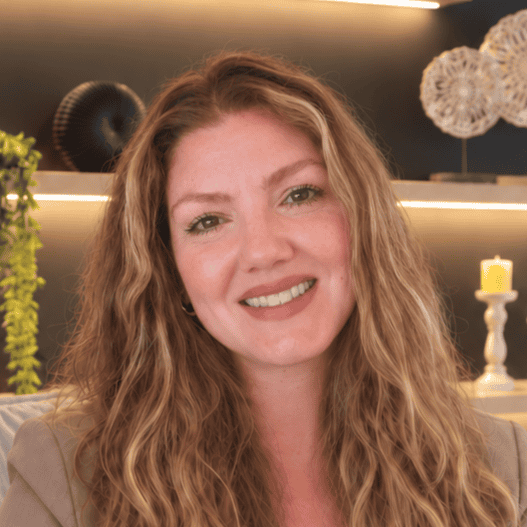 At Art of Mind, a centre founded by psychotherapist Matina Ladikou
At a glance
- Format
- Online by video on Google Meet, 45-minute sessions.
- Who you work with
- A therapist from our team, in English. In Greek, Matina Ladikou.
- Getting started
- Send an enquiry; we reply within 24 hours.
There is help
You don’t have to face this on your own
Silence tends to make things harder: worry builds, intimacy becomes associated with pressure, and couples can drift apart without understanding why.
At Art of Mind, a psychotherapy centre founded in Patras, Greece in 2019, our therapists offer sexual health counselling in English, online by video. We focus on the psychological and relationship side of sexual concerns, and we work alongside doctors, who assess and treat any physical causes.
A broader view of sexual health
It can be helpful to think of sexual health as something wider than function. The WHO's working definition describes it as a state of physical, emotional, mental and social well-being in relation to sexuality, which requires a respectful approach to sexuality and relationships and the possibility of pleasurable and safe experiences free from coercion, discrimination and violence (WHO). In other words, how we feel about sex, about our bodies and about our partners matters as much as what our bodies do.
This view also means there is no single "correct" level of desire or frequency. What matters is whether something is causing you distress, affecting your relationship or getting in the way of the life you want.
Concerns people bring to counselling
People seek sexual health counselling for many reasons, including:
Desire
Low desire, a change in desire over time, or a mismatch in desire between partners.
Arousal and orgasm
Difficulties becoming aroused or reaching orgasm, or ejaculation that feels too quick or too slow.
Anxiety around sex
Performance worries, fear of disappointing a partner, or anxiety that makes it hard to be present.
Pain and fear
The emotional impact of pain during sex, and the anticipation and tension that can follow, once a doctor has assessed the physical side.
Life changes
Intimacy after childbirth, illness, surgery, menopause, or during fertility treatment.
Past experiences and beliefs
Shame, strict messages about sex learned early in life, or difficult past experiences that still affect intimacy.
Body image and confidence
Discomfort with one's body that makes closeness difficult.
For erection-specific concerns, our erectile dysfunction counselling page goes into more detail.
Body and mind together
Sexual response involves hormones, blood flow, nerves and muscles, and also attention, emotion, safety and connection. Physical factors such as medicines, hormonal change, pain conditions and chronic illness can all play a part, so we encourage a medical check, particularly when a difficulty is new, painful or getting worse. Psychological factors often enter the picture too, either as the main cause or as a response to a physical problem. Research on women's sexual problems, for example, found that distressing sexual problems were associated with depression and anxiety as well as with physical health factors (Shifren et al., 2008).
This is why counselling and medical care work best side by side. A doctor addresses what is happening in the body; counselling helps with the worry, avoidance, relationship strain and beliefs that can keep a difficulty going.
What the research says
What research says about psychological help
A systematic review and meta-analysis of 20 randomised controlled studies found that psychological interventions improved symptom severity and sexual satisfaction compared with waiting lists, with the clearest evidence for low sexual desire and orgasm difficulties in women (Frühauf et al., 2013). The authors noted that evidence varies considerably across different difficulties, and that more research is needed on others and on long-term effects. That is a fair summary of the field: psychological help is a valid option for many sexual concerns, and the right combination of support depends on the individual.
Our approach
How our therapists work
Our therapists use an evidence-informed, integrative approach and adapt it to each person or couple. Sexual health counselling may include:
Clear, judgement-free information
Understanding how arousal and desire work, which often eases unnecessary worry.
Exploring the context
Stress, relationship dynamics, health, life stage and personal history.
Reducing pressure
Gradual, agreed exercises that shift the focus from performance to sensation, comfort and connection.
Working with anxious or critical thoughts
Drawing on CBT techniques where helpful.
Communication
Finding words to talk with a partner about needs, limits and preferences.
Processing difficult experiences
Gently, and only at a pace that feels manageable for you.
Our therapists work respectfully and inclusively with adults whatever their relationship status, sexual orientation or gender identity. We do not promise specific results, and we review progress with you regularly.
Online, by video
Getting started online
Contact us
Send a short message through our enquiry form, with your time zone and usual availability. A phrase such as "sexual health counselling" is enough; please keep details for your session. We reply within 24 hours.
Plan the first session
Sessions in English are with a therapist from our centre, online via Google Meet, Monday to Friday between 09:00 and 21:00 Athens time. Choose a private place where you will not be overheard.
The first session
Your therapist will ask about the concern, your general and sexual health history, any medical checks so far and your goals, then agree an initial plan with you.
Continuing sessions
Each session lasts 45 minutes, at 70 € per 45-minute session (for an individual or a couple). See pricing.
Many people find it easier to talk about intimate subjects from their own space. A 2021 meta-analysis found that live psychotherapy by video produced substantial improvements and differed negligibly in outcome from in-person therapy (Fernandez et al., 2021).
Is it time?
When to seek help
Consider seeking support if a sexual concern:
- is causing you distress or affecting your relationship;
- has led you to avoid intimacy;
- comes with low mood, anxiety or feelings of shame;
- appeared after a life event, illness or new medicine.
See a doctor promptly for pain, bleeding, new physical symptoms or concerns about sexually transmitted infections. If you have experienced sexual violence, specialist support services can help, and your safety comes first. Online counselling is not an emergency service.
If you need urgent help. In an emergency call 112. In Greece you can also call 1018 (suicide prevention) or 10306 (mental-health support). For helplines in your country, see findahelpline.com.
If you need urgent help
In an emergency call 112. In Greece you can also call 1018 (suicide prevention) or 10306 (mental-health support). For helplines in your country, see findahelpline.com.
Our founder
Art of Mind, founded by Matina Ladikou
A centre where you can talk without fear of judgement, at your own pace.
Matina Ladikou, psychotherapist and founder of Art of Mind, set up the centre in Patras, Greece, in 2019. Sessions in English are with a therapist from our team; sessions in Greek are with Matina, and you can book Greek sessions directly.
We don’t promise a “guaranteed” or “instant” result; we offer a space of trust and work at your own pace.
Trained in Biothymic Psychotherapy and Clinical Hypnosis, in Mental Health Counselling and in NLP, with an MSc in Criminology from Panteion University.
About Matina and the centreNext step
Enquire about a session
You do not need to find the perfect words before you write to us. Send a short message with your availability, and we will reply within 24 hours.
Related pages: erectile dysfunction counselling · marriage counselling · relationship counselling · pricing
Before you start
Frequently asked questions
What does sexual health counselling cover?
It covers the psychological and relational side of sexual concerns: low or mismatched desire, difficulties with arousal or orgasm, anxiety about sex, the emotional impact of pain during sex, intimacy after illness or childbirth, and the effects of stress, body image or past experiences. Physical causes are assessed by a doctor.
Do I need to see a doctor first?
For many concerns, yes. Hormonal changes, medicines, pain and other physical conditions can affect sexual function, and a doctor can check for them. Counselling works on the psychological and relationship side, alongside any medical care.
Can I come alone, or with a partner?
Either. Many people start on their own; others prefer to come with a partner. We discuss what would be most helpful in the first session, and the format can change over time.
Is the counselling inclusive?
Yes. Our therapists work respectfully with adults of any relationship structure, sexual orientation or gender identity, and with people who are single as well as those in relationships.
Will I have to go into graphic detail?
No. You decide what you share and when. Your therapist uses plain, respectful language and focuses on what is useful for change, not on details for their own sake.