Addiction therapy onlineTake back what matters to you.
Addiction can creep up quietly. Something that once helped you relax, escape, focus or feel part of a group gradually becomes something you need, then something you hide, then something that seems to run your life.
Online in English, with a therapist from our team, wherever you live · Sessions in Greek are with Matina Ladikou.
Each session lasts 45 minutes and costs 70 €. All fees
 At Art of Mind, a centre founded by psychotherapist Matina Ladikou
At a glance
- Format
- Online by video on Google Meet, 45-minute sessions.
- Who you work with
- A therapist from our team, in English. In Greek, Matina Ladikou.
- Getting started
- Send an enquiry; we reply within 24 hours.
There is help
You don’t have to face this on your own
Promises to stop are made and broken; money, relationships, work and health start to suffer; and shame makes it harder to ask for help.
Addiction is a treatable condition, not a moral failing, and we work with people who want to change. At Art of Mind, a psychotherapy centre founded in Patras, Greece, in 2019, addiction therapy in English takes place online by video with a therapist from our centre, in collaboration with doctors and psychiatrists where medical care is needed.
Addiction is not a moral failure
The US National Institute on Drug Abuse notes that many people mistakenly think that people who use drugs lack moral principles or willpower, whereas in reality addiction is a complex disease, and quitting usually takes more than good intentions or a strong will, because drugs change the brain in ways that make quitting hard1. Understanding this can reduce the shame that so often keeps people from seeking help.
The scale of the problem is significant. According to the WHO, 2.6 million deaths per year were attributable to alcohol consumption and 0.6 million to psychoactive drug use2.
Recognising it
How addiction shows up
Whatever the substance or behaviour, addiction tends to share common features:
- Loss of control: using more, or for longer, than intended.
- Craving: strong urges that are hard to resist.
- Continuing despite harm to health, relationships, work or finances.
- Tolerance and withdrawal, for many substances.
- Neglect of responsibilities and activities that used to matter.
- Secrecy, lying or hiding use.
- Using to cope with stress, emotions, pain or memories.
Addictions we work with include alcohol (see our dedicated page on alcohol addiction therapy), cannabis, stimulants, misused prescription medicines, and behavioural addictions such as gambling. For nicotine, see stop smoking counselling.
Our role, and collaboration with doctors
Addiction often affects both mind and body. Some substances, for example alcohol, benzodiazepines and opioids after regular use, can cause dangerous withdrawal if stopped suddenly, and some people need medication to support recovery. Where there are physical health risks, withdrawal or a need for medication, we work alongside doctors and psychiatrists, and psychological therapy is one part of a coordinated plan.
Our part is psychological: helping you understand what keeps the addiction going, build motivation and skills, address underlying difficulties such as anxiety, depression or trauma, and create a life in which you do not need the substance or behaviour to cope.
Our approach
How therapy helps with addiction
NIDA describes treatment and recovery as possible, and emphasises that addiction is a chronic condition in which relapse can be part of the process; newer treatments are designed to help with relapse prevention, and relapse rates are similar to those for other chronic medical illnesses such as high blood pressure and asthma5. NICE guidance covers psychosocial interventions for adults and young people over 16 with problems involving opioids, stimulants or cannabis, aiming to reduce drug use and improve physical and mental health, relationships and employment6.
The evidence for psychological therapy is real but honest about its limits. A 2026 meta-analysis of 52 randomised trials found that cognitive behavioural therapy for substance use disorders outperformed usual care or minimal treatment for consumption outcomes and showed benefits for psychosocial functioning when added to usual care3. For gambling disorder, a meta-analysis of 29 randomised trials found a medium effect of psychological interventions on gambling severity4.
Our therapists work in an integrative, evidence-informed way. Sessions usually include:
- Building motivation without judgement, including exploring ambivalence, which is a normal part of change.
- Assessment and safety planning, including any need for medical support.
- Understanding triggers: situations, people, emotions and thoughts linked with use.
- Techniques from cognitive behavioural therapy, where helpful, to cope with cravings and challenge permission-giving thoughts.
- Alternative coping strategies for stress, painful emotions and boredom.
- Working on underlying difficulties: anxiety, low mood, trauma, relationship problems, low self-esteem.
- Rebuilding life: routines, relationships, work and meaning.
- Relapse prevention: high-risk situations, early warning signs and what to do if a lapse happens.
Supporting someone with an addiction
Families often swing between anger, fear and trying to control the situation. It can help to talk calmly when the person is not under the influence, describe specific behaviours and their effects, set and keep clear boundaries, avoid covering up consequences, and seek support for yourself. Recovery is usually not linear, and your wellbeing matters too.
Online, by video
Online therapy for addiction
Online sessions reduce practical and emotional barriers: no travel, no waiting rooms, no fear of being recognised. They also make it easier to have regular contact during the early, vulnerable weeks. Video therapy has shown outcomes broadly comparable to in-person therapy for common mental health problems7, and online sessions combine well with medical care and peer support groups.
Is it time?
When to seek help
Consider therapy if you recognise several of the signs above, if you have tried to cut down or stop and could not, if use is causing problems in your health, relationships, work or finances, or if you use substances or behaviours to cope with feelings.
Seek medical help before stopping alcohol, benzodiazepines or opioids if you use them regularly. Call 112 in an emergency, such as a suspected overdose, a seizure, loss of consciousness or thoughts of harming yourself.
Online, by video
How online therapy with us works
Send an enquiry.
Through our contact form with a short note, your time zone and preferred times.
We reply within 24 hours.
And arrange your first session with a therapist from our centre.
You meet by video.
On Google Meet, for 45 minutes, Monday to Friday between 09:00 and 21:00 Athens time.
The first session.
Covers your history, current use, safety and goals, and ends with an initial plan.
Sessions in English cost 70 € per 45-minute session. See our pricing page. For gaming and gambling, see also our page on gambling and gaming addiction therapy.
If you need urgent help
In an emergency call 112. In Greece you can also call 1018 (suicide prevention) or 10306 (mental-health support). For helplines in your country, see findahelpline.com.
Our founder
Art of Mind, founded by Matina Ladikou
A centre where you can talk without fear of judgement, at your own pace.
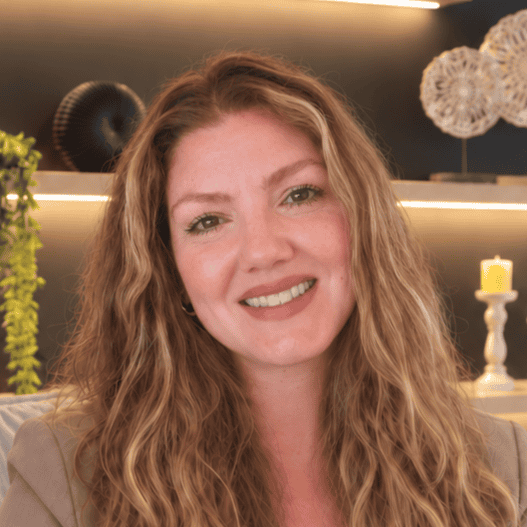
Matina Ladikou, psychotherapist and founder of Art of Mind, set up the centre in Patras, Greece, in 2019. Sessions in English are with a therapist from our team; sessions in Greek are with Matina, and you can book Greek sessions directly.
We don’t promise a “guaranteed” or “instant” result; we offer a space of trust and work at your own pace.
Trained in Biothymic Psychotherapy and Clinical Hypnosis, in Mental Health Counselling and in NLP, with an MSc in Criminology from Panteion University.
About Matina and the centreNext step
Change is possible
You do not need to have everything figured out to take the first step. A short message is enough.
Before you start
Frequently asked questions
Which addictions do you work with?
We work with people struggling with alcohol, drugs such as cannabis, stimulants or misused prescription medicines, and behavioural addictions such as gambling. Where withdrawal or physical health needs medical care, we work alongside doctors and psychiatrists.
Is relapse a sign that treatment has failed?
No. For many people, a return to use can be part of the recovery process, and research shows that relapse rates for substance use are similar to those for other chronic health conditions. Therapy treats a lapse as information to learn from and adjusts the plan.
Do I need a detox first?
It depends on the substance and how much you use. Stopping some substances suddenly, such as alcohol, benzodiazepines or opioids after regular use, can be risky and needs medical supervision. In the first session we look at safety and, where needed, coordinate with medical care.
Is online therapy suitable for addiction?
For many people, yes. It allows regular contact without travel or the worry of being seen at a clinic. Research on digitally delivered cognitive behavioural interventions for alcohol and other drug use is growing, and online sessions combine well with medical care and peer support.
Can families get support?
Yes. Addiction affects the whole family. Family members can have their own sessions to look after themselves and learn how to support recovery without enabling it.
How much does a session cost?
Sessions in English are 70 € per 45-minute session. Full details are on our pricing page.