
Online alcohol addiction therapyA different relationship with alcohol.
Alcohol problems rarely start as a problem. A drink to unwind after work becomes two or three; weekends start on Thursday; you find yourself hiding bottles, promising yourself that tomorrow will be different, or waking up with anxiety and gaps in your memory.
Online in English, with a therapist from our team, wherever you live · Sessions in Greek are with Matina Ladikou.
Each session lasts 45 minutes and costs 70 €. All fees
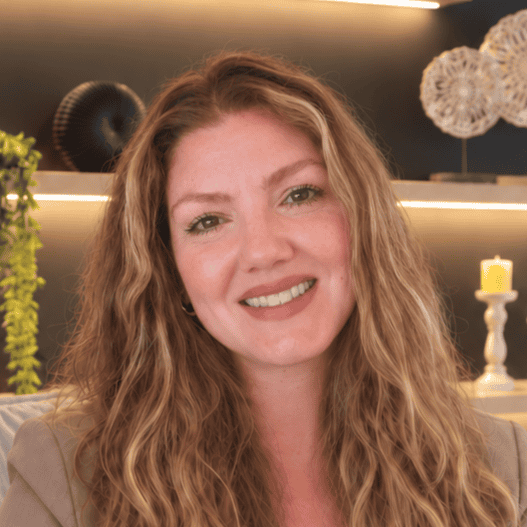 At Art of Mind, a centre founded by psychotherapist Matina Ladikou
At a glance
- Format
- Online by video on Google Meet, 45-minute sessions.
- Who you work with
- A therapist from our team, in English. In Greek, Matina Ladikou.
- Getting started
- Send an enquiry; we reply within 24 hours.
There is help
You don’t have to face this on your own
Perhaps people close to you have said they are worried, or perhaps you have noticed it yourself and are not sure what to do next.
Alcohol use disorder is a medical condition, not a moral failing, and we work with people who want to change their drinking. At Art of Mind, a psychotherapy centre founded in Patras, Greece, in 2019, therapy for alcohol problems in English takes place online by video with a therapist from our centre, alongside medical care where it is needed.
Recognising it
What is alcohol use disorder?
The US National Institute on Alcohol Abuse and Alcoholism defines alcohol use disorder as a medical condition characterised by an impaired ability to stop or control alcohol use despite adverse social, occupational or health consequences; it covers what people sometimes call alcohol abuse, alcohol dependence or alcoholism1. It ranges from mild to severe.
Alcohol use disorders are common. The World Health Organization estimates that around 400 million people, or 7% of the world's population aged 15 and over, live with alcohol use disorders, and that alcohol consumption caused about 2.6 million deaths in 20192.
Recognising it
Signs of an alcohol problem
The NHS lists signs of alcohol use disorder that include5:
- regularly drinking more than you mean to;
- difficulty stopping or cutting down, even when you want to;
- feeling guilty or remorseful after drinking;
- people you know being concerned about your drinking;
- continuing to drink even when it causes problems with health, work or relationships;
- craving alcohol, for example needing a drink when you wake up;
- needing more alcohol to get the same effect;
- withdrawal symptoms when you stop or cut down.
From habit to dependence
Alcohol problems usually develop gradually. Drinking may start as a way to relax, socialise or cope with stress, anxiety, low mood or loneliness. Over time, tolerance builds, so more alcohol is needed for the same effect, and drinking becomes linked with more situations and feelings. In dependence, the body adapts to alcohol, and stopping triggers withdrawal. Many people who drink heavily also live with anxiety, depression or trauma, and each can make the other worse, which is why it helps to work on both.
Safety first: alcohol withdrawal
The NHS warns that it can be very dangerous to stop drinking suddenly if you are dependent on alcohol, and advises getting medical help before trying to stop if you have withdrawal symptoms5. Withdrawal symptoms can include anxiety, sleep problems, nausea, sweating, shaking, a racing heartbeat and, in more severe cases, hallucinations, confusion and seizures5,6. They usually begin within hours of the last drink.
For this reason, if there are signs of physical dependence, we work alongside doctors so that any reduction or detoxification is medically supervised. Therapy then supports you through the process and beyond.
Our approach
How therapy helps with alcohol problems
Evidence-based care for alcohol use disorder is a continuum, from brief interventions to more intensive and longer-term treatment, combining psychological and, where appropriate, medical approaches4. NICE guidance recommends that psychological interventions are based on an evidence-based treatment manual and delivered by trained staff, alongside assessment of physical and mental health and of readiness to change3. A 2026 meta-analysis of 52 trials found that cognitive behavioural therapy for substance use disorders improved consumption and psychosocial outcomes, particularly when added to usual care7.
Our therapists work in an integrative, evidence-informed way. Sessions usually include:
- Exploring motivation without judgement: what alcohol gives you, what it costs and what you want for yourself.
- Setting a goal that is safe and realistic, whether stopping or reducing, coordinated with your doctor where needed.
- Understanding triggers: people, places, emotions and times of day linked with drinking.
- Techniques from cognitive behavioural therapy, where helpful, to manage cravings and permission-giving thoughts.
- Alternative ways to cope with stress, anxiety, low mood, boredom and loneliness.
- Rebuilding routines and relationships that support a life with less or no alcohol.
- Relapse prevention: planning for high-risk situations and responding constructively to slips.
- Working on underlying difficulties, such as anxiety, depression or past trauma.
Supporting someone who drinks too much
If someone you love drinks heavily, choose a calm, sober moment to talk, describe specific behaviour and how it affects you, and avoid labels and ultimatums you cannot keep. Do not cover for them or take responsibility for their drinking, and look after your own wellbeing. Family members can also benefit from support in their own right.
Online, by video
Online therapy for alcohol problems
Online sessions remove some barriers that stop people seeking help, such as embarrassment about being seen at a clinic, travel and work schedules. They also make it easier to keep regular contact in the first weeks. Research on digitally delivered cognitive behavioural interventions for alcohol and other drug use is growing, and video therapy in general has shown outcomes broadly comparable to in-person therapy8.
Is it time?
When to seek help
Consider therapy if you recognise several of the signs above, if attempts to cut down have not worked, if drinking is affecting your health, work or relationships, or if you drink to cope with difficult feelings.
Seek medical help first if you get shaking, sweating, anxiety or other withdrawal symptoms when you cut down. Call 112 in an emergency, for example if someone has a seizure, becomes confused or is very drunk and unresponsive.
Online, by video
How online therapy with us works
Send an enquiry.
Through our contact form with a short note, your time zone and preferred times.
We reply within 24 hours.
And arrange your first session with a therapist from our centre.
You meet by video.
On Google Meet, for 45 minutes, Monday to Friday between 09:00 and 21:00 Athens time.
The first session.
Looks at your drinking, health and history, including safety, and ends with an initial plan.
Sessions in English cost 70 € per 45-minute session. See our pricing page. For other substances and behaviours, see our page on addiction therapy.
If you need urgent help
In an emergency call 112. In Greece you can also call 1018 (suicide prevention) or 10306 (mental-health support). For helplines in your country, see findahelpline.com.
Our founder
Art of Mind, founded by Matina Ladikou
A centre where you can talk without fear of judgement, at your own pace.
Matina Ladikou, psychotherapist and founder of Art of Mind, set up the centre in Patras, Greece, in 2019. Sessions in English are with a therapist from our team; sessions in Greek are with Matina, and you can book Greek sessions directly.
We don’t promise a “guaranteed” or “instant” result; we offer a space of trust and work at your own pace.
Trained in Biothymic Psychotherapy and Clinical Hypnosis, in Mental Health Counselling and in NLP, with an MSc in Criminology from Panteion University.
About Matina and the centreNext step
The first step does not have to be perfect
You do not need to have decided everything before you get in touch. A short message is enough.
Before you start
Frequently asked questions
Do I have to stop drinking completely?
Not necessarily at the start. Some people aim for complete abstinence, others for cutting down to lower-risk levels. The right goal depends on how severe the problem is, your health and your own wishes. If you are dependent on alcohol, abstinence is usually the safer goal, and how you stop needs medical guidance.
Is it safe to stop drinking suddenly?
If you are physically dependent on alcohol, stopping suddenly can be dangerous, with withdrawal symptoms that can include seizures and hallucinations. If you get withdrawal symptoms such as shaking, sweating or anxiety when you cut down, speak to a doctor before stopping. We work alongside doctors so that withdrawal is managed safely.
Can therapy help if I still have doubts about stopping?
Yes. Feeling torn is normal. Therapy can start by exploring what drinking gives you and what it costs you, without pressure, so that you can decide what you want to change.
Does online therapy work for alcohol problems?
Psychological treatments for alcohol use disorder, such as cognitive behavioural approaches, have research support, and research on digitally delivered cognitive behavioural interventions for alcohol and other drug use is growing. Online sessions also make it easier to keep regular contact, which matters in early recovery.
Can family members get support too?
Yes. Living with someone who drinks heavily is stressful. Family members can have their own sessions, and with the client's consent, family can sometimes be involved in the work.
How much does a session cost?
Sessions in English are 70 € per 45-minute session. Full details are on our pricing page.